


Customer Welcome Kits Build Confidence From Day One
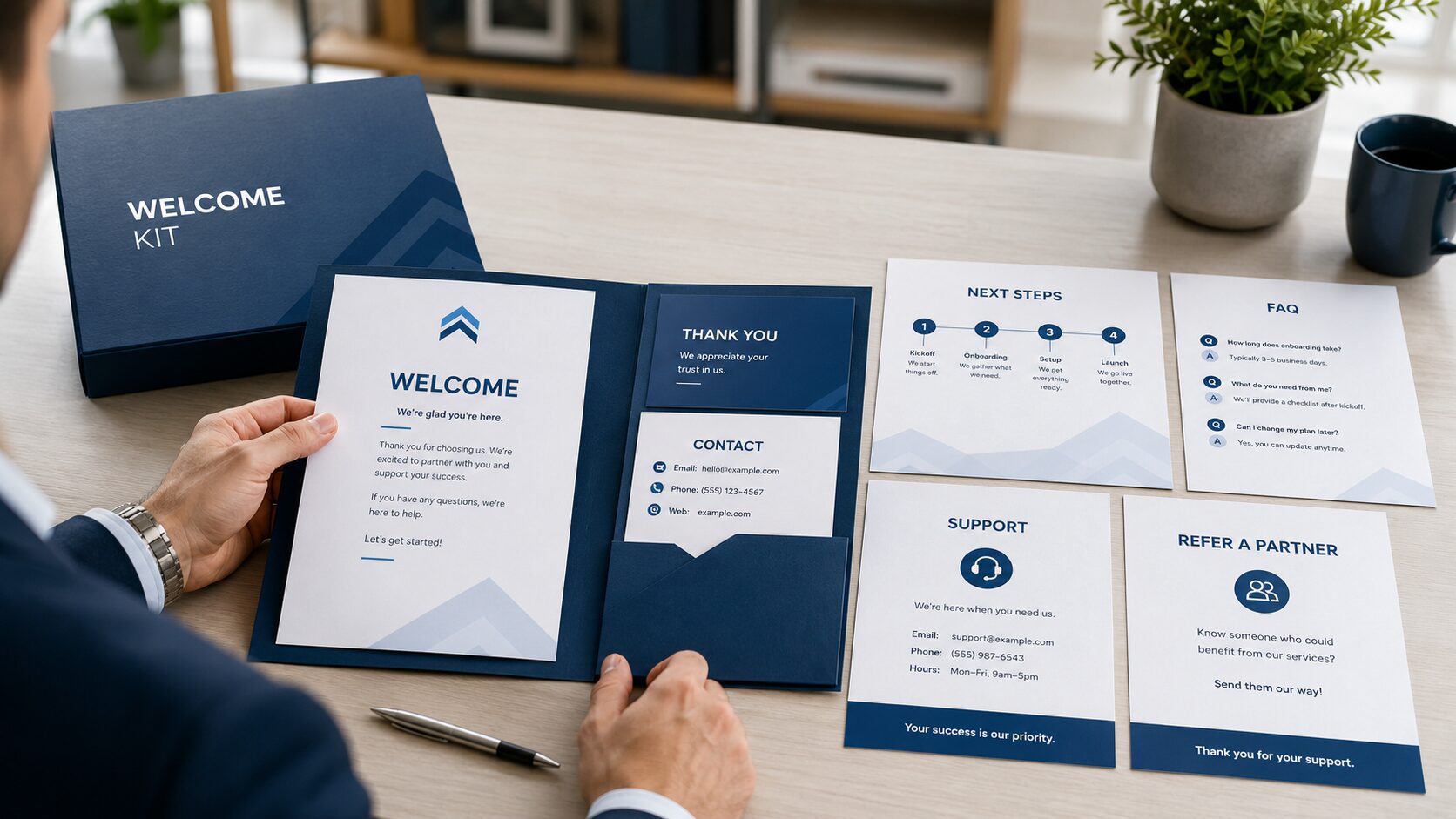
A customer welcome kit helps new customers understand what happens after they say yes. It answers common questions, introduces key contacts, sets expectations, and gives customers one place to find information they may need later.
The sale is not the finish line. It is the start of the working relationship.
Once a customer signs an agreement, places an order, or schedules a service, new questions usually follow:
- What happens next?
- Who should I contact?
- How long will the process take?
- What do you need from me?
- Where can I find support or warranty information?
Companies that answer these questions early create a smoother customer experience. They also reduce the number of routine calls and emails their employees must handle.
That is where a well-planned customer welcome kit can help.
What Is a Customer Welcome Kit?
A customer welcome kit is a printed or digital collection of information provided shortly after a customer makes a purchase or begins working with your company.
It does not need to be expensive or complicated. It needs to be organized, accurate, and useful.
Depending on your business, a welcome kit may include:
- A personalized welcome letter
- Important contact information
- A summary of the next steps
- Project or service timelines
- Frequently asked questions
- Product care instructions
- Warranty details
- Support resources
- Referral or loyalty information
Some companies provide everything in a branded pocket folder, presentation box, envelope, or binder. Others combine printed materials with a QR code that links to online forms, videos, account portals, or updated information.
The format matters less than the experience it creates.
Answer Questions Before Customers Have to Ask
Start by reviewing the questions customers ask most often after completing a purchase.
Your sales, customer service, production, installation, and billing teams probably answer many of the same questions every week. Those repeated questions give you a ready-made outline for your customer welcome kit.
For example, customers may want to know:
- When their order will enter production
- How scheduling works
- What could cause a delay
- Who approves changes
- When payment is due
- How to request service
- What their warranty covers
- How to prepare for delivery or installation
Answering these questions early gives customers a clear picture of the process. It also prevents confusion caused by different employees giving slightly different answers.
Clear information builds confidence. It shows customers that your company has a process and knows what comes next.
What Should You Include in a Welcome Kit?
Every business needs something different. Focus on the information your customers will actually use.
Welcome Letter
Open with a short letter thanking the customer and confirming their decision to work with you.
Keep it personal. Explain what they should expect next and reinforce the value your company will provide.
Whenever possible, include the customer’s name, company, salesperson, product, or service. Personalization makes the materials feel intentional rather than generic.
Key Contacts
Tell customers who to contact for specific needs.
Instead of listing one general phone number, identify contacts for areas such as:
- Account questions
- Scheduling
- Technical support
- Billing
- Service requests
- Warranty claims
Include names, job titles, phone numbers, email addresses, and business hours when appropriate.
Next Steps
Give customers a simple overview of what happens after the sale.
A numbered list or timeline works well:
- Order or project review
- Customer approval
- Production or preparation
- Scheduling
- Delivery or installation
- Follow-up and support
This section can reduce uncertainty, especially when the process takes several days or weeks.
Frequently Asked Questions
Include short answers to the questions your team hears most often.
Avoid turning this section into a technical manual. Cover the questions that affect most customers and provide contact information for anything more involved.
Product or Service Information
Provide instructions that help customers get the best results from their purchase.
This may include:
- Care and cleaning instructions
- Maintenance schedules
- Setup information
- Recommended supplies
- Troubleshooting steps
- Safety information
- Service limitations
Good instructions can reduce preventable service calls and help customers protect their investment.
Warranty and Support Details
Explain the warranty in plain language.
Tell customers:
- What the warranty covers
- How long coverage lasts
- What may void the warranty
- What documentation they should keep
- How to submit a claim
Do not make customers search through several pages of legal language to find basic warranty information.
Referral or Loyalty Offer
The period immediately following a purchase can be a good time to introduce a referral program, loyalty offer, or reorder process.
Keep the offer simple. Explain the benefit and provide a clear next step, such as scanning a QR code, visiting a web page, or contacting their account representative.
Printed Welcome Kits Still Have Value
Digital communication is convenient, but emails get buried and links get lost.
A printed customer welcome kit gives customers something they can keep, reference, and share with other people involved in the purchase.
A branded pocket folder works well when you need to organize several pieces, such as:
- Welcome letters
- Service guides
- Contracts
- Product sheets
- Warranty documents
- Contact cards
- Referral materials
Presentation boxes can work for high-value products, membership programs, employee onboarding, real estate closings, financial services, and luxury purchases.
A printed piece can also direct customers to digital resources. Add QR codes that link to instructional videos, account login pages, online forms, appointment scheduling, or support information.
This approach gives customers the convenience of digital access without relying on email alone.
Keep the Information Clear
A welcome kit should reduce confusion, not create another stack of paperwork.
Use short sections, clear headings, and plain language. Put the most important information near the front.
Before distributing the kit, ask:
- Can customers find phone numbers quickly?
- Are the next steps easy to follow?
- Are deadlines and timelines clear?
- Does each document have a specific purpose?
- Is all contact and warranty information current?
- Could someone unfamiliar with your company understand the process?
Remove anything that does not help the customer take action, answer a question, or feel better prepared.
Match the Welcome Kit to Your Brand
Your welcome materials should match the experience customers had during the sales process.
Use consistent:
- Colors
- Logos
- Fonts
- Photography
- Writing style
- Paper and finishing choices
A professional presentation reinforces the customer’s decision. Poorly organized or outdated materials can do the opposite.
The materials do not need to be elaborate, but they should look planned.
Review and Update Your Kit Regularly
A customer welcome kit loses value when the information becomes outdated.
Assign someone to review it on a regular schedule. Check contact names, phone numbers, web addresses, pricing references, policies, and timelines.
Your team should also track new customer questions. When the same question comes up repeatedly, consider adding the answer to the kit.
This turns your welcome materials into a working customer service tool rather than a one-time marketing project.
Confidence Starts After the Sale
Many companies spend most of their time attracting new customers. Far fewer pay close attention to what customers experience immediately after making a purchase.
A useful customer welcome kit closes that gap.
It answers questions, sets expectations, organizes important information, and gives customers a clear path forward. It can also save your team time by reducing repetitive calls and emails.
The best welcome kits are not the thickest or most expensive. They are the ones customers actually use.
Give customers the right information at the right time, and you give them another reason to feel confident that they chose the right company.
Start here:
👉 https://www.gsghome.com
Contact Us for More Information
Are you looking for a printer who can help you meet your deadlines?
Then your in the right place! Have any questions or concerns we would love to hear from you.
Please submit your information in this form and a sales professional will reach out to you.
Want to Speak to a Sales Representative? Call 770-424-2300