


The “Paperless World” Myth: Why Print Still Matters Today
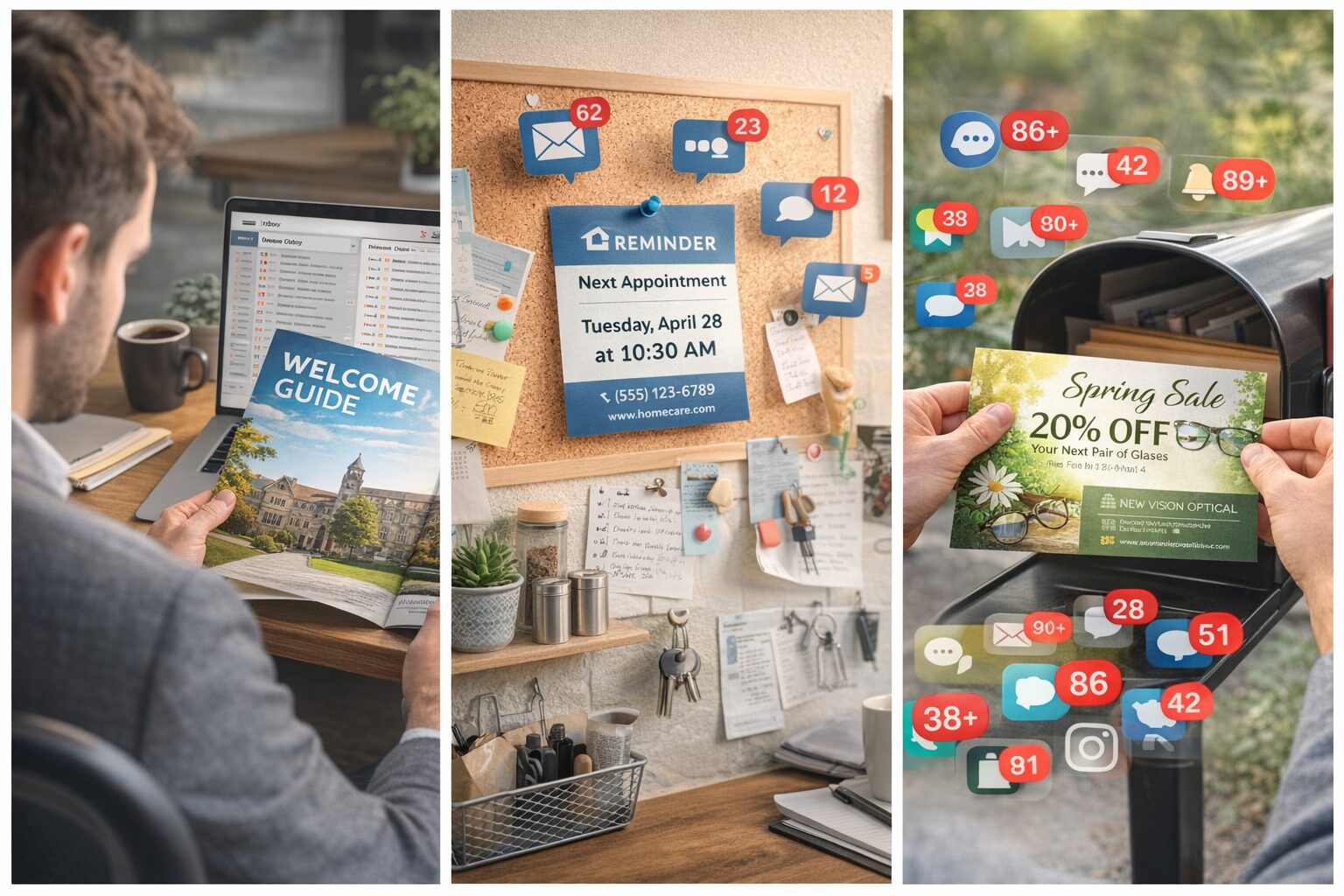
For years, businesses were told the future would be paperless.
It sounded efficient. Modern. Smart. Cheap.
But here we are in 2026, and the paperless shift did not happen the way it was promised. In fact, customers now pay more attention to printed materials than they did a decade ago.
Not because of new innovations in print.
Because digital became overwhelming.
Inbox filters tightened. Notifications multiplied. Messages stacked faster than anyone could read them. Digital communication got faster, but attention got harder to earn.
That “paperless world” never accounted for human behavior.
Digital Did Not Simplify Communication. It Saturated It.
Businesses moved aggressively to digital because it promised convenience.
Send faster. Store easier. Update instantly.
Internally, that worked. Externally, it created noise.
Email open rates now hover around 20 to 30 percent on a good day. Most marketing emails never get opened at all. By contrast, direct mail still sees open rates as high as 90 percent, simply because it physically arrives and gets handled
Source: LettrLabs, 2025
https://www.lettrlabs.com/post/direct-mail-stats-2025
Digital messages compete inside crowded inboxes and browser tabs. Subject lines blur together. Logos shrink to icons. Every message feels temporary.
Print never had that problem.
A printed piece arrives with weight, texture, and intent. It looks deliberate. It feels like something meant to be read, not dismissed.
Digital begs for attention.
Print earns it.
Print Engages the Brain Differently
Neuromarketing research consistently shows that people process print differently than screens.
Studies cited by Mimeo and other research firms show that printed materials require less cognitive effort to understand and are more likely to be remembered, especially when they include personalization
Source: Mimeo
https://www.mimeo.com/blog/statistics-print-collateral-marketing
One often-cited finding is that variable printed materials take roughly 21 percent less mental effort to process than digital media, which helps explain why print feels clearer and more credible
Source: Liaison Education
https://www.liaisonedu.com/resources/blog/the-importance-of-variable-print-when-marketing-a-college-or-university
This matters when your message needs to stick.
A Simple Reality Check From the Field
A large home services company struggled with missed appointments.
Email reminders went unopened. Text alerts got buried. Automated workflows ran perfectly, yet customers still forgot.
They made one change.
After each consultation, they left behind a simple printed follow-up card. No campaign. No redesign. Just clear information customers could keep.
Missed appointments dropped. Calls increased. Customers said the same thing repeatedly: “This helped me remember.”
That outcome aligns with broader data. Direct mail response rates average around 4 to 5 percent, compared to roughly 0.1 percent for digital display ads
Source: Resimpli
https://resimpli.com/blog/direct-mail-statistics
People remember what they can touch.
Print Became the Signal When Digital Became Noise
As digital channels crowded themselves, print became the premium version of communication.
A printed welcome letter feels important because everything else arrives as a notification.
A folder handed across a desk feels credible because most interactions stay on screens.
A branded envelope signals relevance before it ever gets opened.
Trust plays a role here.
Surveys show that 71 percent of consumers say direct mail feels more personal and trustworthy than online communication
Source: Postalytics
https://www.postalytics.com/direct-mail-statistics
Even younger audiences respond.
Several studies show that Gen Z and younger Millennials respond to physical mail at higher rates than expected, with some research citing response rates above 10 percent, far higher than most digital formats
Source: RocketPrint
https://www.rocketprint.com/blog/direct-mail-statistics
Print did not disappear. It became the differentiator.
The Paperless Push Was About Efficiency, Not Customers
The paperless movement was driven by internal cost savings and workflow efficiency. Customers were never demanding fewer printed materials. They were asking for clearer communication.
Customers still:
- Save printed guides
- Pin reminder cards to bulletin boards
- Trust physical materials more than pop-up prompts
- Prefer instructions they can place on a counter instead of swiping away
- Request a printed restaurant menu versus scanning a QR code
Research within campus and business environments shows printed materials still rank alongside digital channels as primary information sources for key decisions
Source: ResearchGate
https://www.researchgate.net/publication/364456330_To_Print_or_Not_to_Print_An_Investigation_of_Print_Marketing_Preference_and_Use_in_the_Campus_Community
Digital channels are convenient.
Print is convincing.
There is a difference.
What Businesses Should Do in 2026
This is not a print-versus-digital argument.
It is a timing argument.
Use digital when speed matters.
Use print when clarity, trust, and recall matter.
Use both when results matter.
Revisit the tangible pieces that shape how customers experience your brand:
- Envelopes
- Cards
- Folders
- Packaging
- Brochures
- Leave-behind materials
These items still communicate presence and intent in ways screens cannot replicate.
In a market full of pixels, the brands that win are the ones with information customers can hold and make an impact.
Contact Us for More Information
Are you looking for a printer who can help you meet your deadlines?
Then your in the right place! Have any questions or concerns we would love to hear from you.
Please submit your information in this form and a sales professional will reach out to you.
Want to Speak to a Sales Representative? Call 770-424-2300